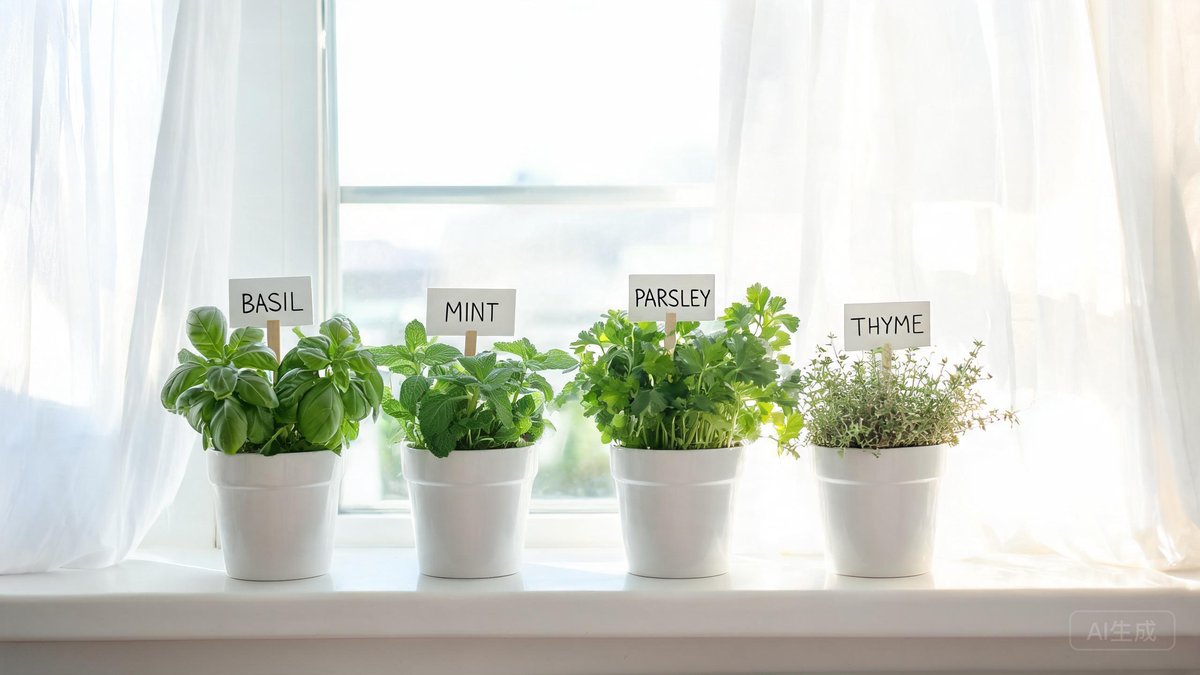
Fresh basil for pasta, cilantro for tacos, rosemary for roasted potatoes — these cost $2 to $3 per plastic clamshell at the grocery store and wilt before you use half the package. An indoor herb garden gives you exactly as much as you need, when you need it, for pennies per harvest. And contrary to what you might have heard, you do not need a greenhouse or a green thumb. You need the right herbs, the right light, and a consistent watering routine. Here is how to set one up.
The Best Herbs for Indoor Growing (and Which to Skip)
Not every herb tolerates indoor conditions. Your kitchen windowsill is roughly equivalent to a partly shaded outdoor spot, even on the sunniest side of the house. That means you want herbs that evolved as forest understory plants or that adapt well to lower light.
Basil is the heavy hitter — it grows fast, produces continuously, and tastes nothing like the limp leaves in plastic boxes. Choose compact varieties like Spicy Globe or Greek basil rather than large-leaved Genovese types, which get leggy indoors. Mint is nearly indestructible and spreads aggressively, so it needs its own container. Chives regrow from every cut and tolerate low light better than almost any other culinary herb. Rosemary thrives indoors if you give it strong light and excellent drainage; it struggles in soggy soil. Thyme and oregano both do well in small pots and need infrequent watering, making them forgiving starter plants.
Skip cilantro, dill, and parsley if you are a beginner. These are annual herbs with taproots that resent transplanting, and they bolt — that is, flower and turn bitter — as soon as indoor temperatures fluctuate more than a few degrees. They are easier to grow from seed outdoors in spring and fall. Also skip full-sun Mediterranean herbs like lavender, which will sulk and develop powdery mildew without 8-plus hours of direct sun.
Lighting: Why a South Window Is Not Always Enough
Your sunniest window delivers maybe 400 to 800 foot-candles of light on a clear day, and far less in winter. Culinary herbs need a minimum of 1,000 foot-candles for 12 to 14 hours a day to produce the essential oils that give them flavor. A south-facing window can work from May through September in most of the United States, but from October to April, you need supplemental lighting — otherwise your herbs will survive but taste bland and watery.
Design Tip: The EPA estimates that indoor air is 2-5 times more polluted than outdoor air. Adding one houseplant per 100 square feet reduces VOCs by roughly 25%.
A simple LED grow light solves this. A full-spectrum panel that draws 20 to 40 watts, costs $25 to $50, and fits a standard light fixture is all you need for a kitchen counter setup. Position it 6 to 12 inches above the plants and run it 14 hours a day. Plug it into a basic outlet timer so you never forget to turn it on or off. The timers cost $8 and pay for themselves in herbs that do not die.
Watch your plants for light signals. Leggy, stretched stems with wide gaps between leaves mean the light is too far away or not bright enough. Leaves that curl, develop brown edges, or look bleached mean the light is too close or running too long. Adjust by an inch or two and observe for a week before changing anything else.
Watering and Soil for Container Herbs
Indoor herbs die from overwatering more than any other cause. Herbs prefer soil that dries out between waterings — most come from Mediterranean climates where a dry spell is normal. Stick your finger an inch into the soil. If it feels damp, skip the watering can. If it feels dry and the pot feels light when you lift it, water until it drains freely from the bottom.
Use a potting mix designed for containers, never garden soil. Garden soil compacts in pots, suffocates roots, and brings outdoor pests inside. A mix of two-thirds standard potting soil and one-third perlite or coarse sand gives herbs the fast drainage they need. Standard terra cotta pots are ideal because they wick excess moisture through their walls. Plastic pots work too, but you will need to be more disciplined about watering frequency.
Fertilize lightly. Herbs produce more flavorful leaves when they grow in lean soil. A half-strength application of liquid fish emulsion or seaweed fertilizer once a month during spring and summer is plenty. Stop fertilizing from November through February when growth naturally slows. Over-fertilized herbs grow lush and fast but taste almost like nothing — all leaf, no flavor.
Harvesting So Plants Keep Producing
How you harvest determines how long your plant lives. Never strip more than one-third of a plant's leaves at one time. The remaining foliage needs to photosynthesize enough to power regrowth. Take leaves from the top and outer edges first, which encourages the plant to branch and become bushier rather than tall and sparse.
Harvest basil by pinching stems just above a pair of leaves — two new stems will emerge from that node, doubling your future yield. For chives, snip individual leaves at the soil line rather than shearing the whole clump halfway up. For rosemary and thyme, snip 2- to 3-inch sprigs from the tips, which are the most tender and flavorful parts. Use clean scissors or your fingernails; tearing stems by hand leaves ragged wounds that invite disease.
If a plant starts flowering — you will see buds or small white blooms — pinch them off immediately. Once an herb flowers, it shifts energy from leaf production to seed production, and the leaves turn bitter. Regular harvesting actually delays flowering because you keep removing the growth tips before they can set buds.
Common Mistakes to Avoid in the First Month
The biggest mistake new indoor gardeners make is starting with too many plants. A single basil plant in a 6-inch pot produces enough leaves for a family of four if you harvest correctly. Start with two or three herbs and master those before expanding. You will spend less money and feel less guilt when you inevitably lose one while learning.
Another common error is repotting immediately after bringing herbs home from the nursery. The plant is already stressed from the change in environment — light, humidity, temperature. Give it two weeks in its nursery pot before transplanting, water lightly, and keep it out of direct light for the first 48 hours. This acclimation period dramatically reduces transplant shock.
Finally, group your herbs together. Plants release moisture through their leaves through a process called transpiration, and a cluster of herbs creates a humid microclimate that indoor air alone cannot provide. Most homes hover around 30% to 40% relative humidity in winter, while herbs prefer 50% to 60%. Grouping pots on a pebble tray with a half inch of water creates exactly this environment without the expense of a humidifier.