How to Childproof Your Home Room by Room
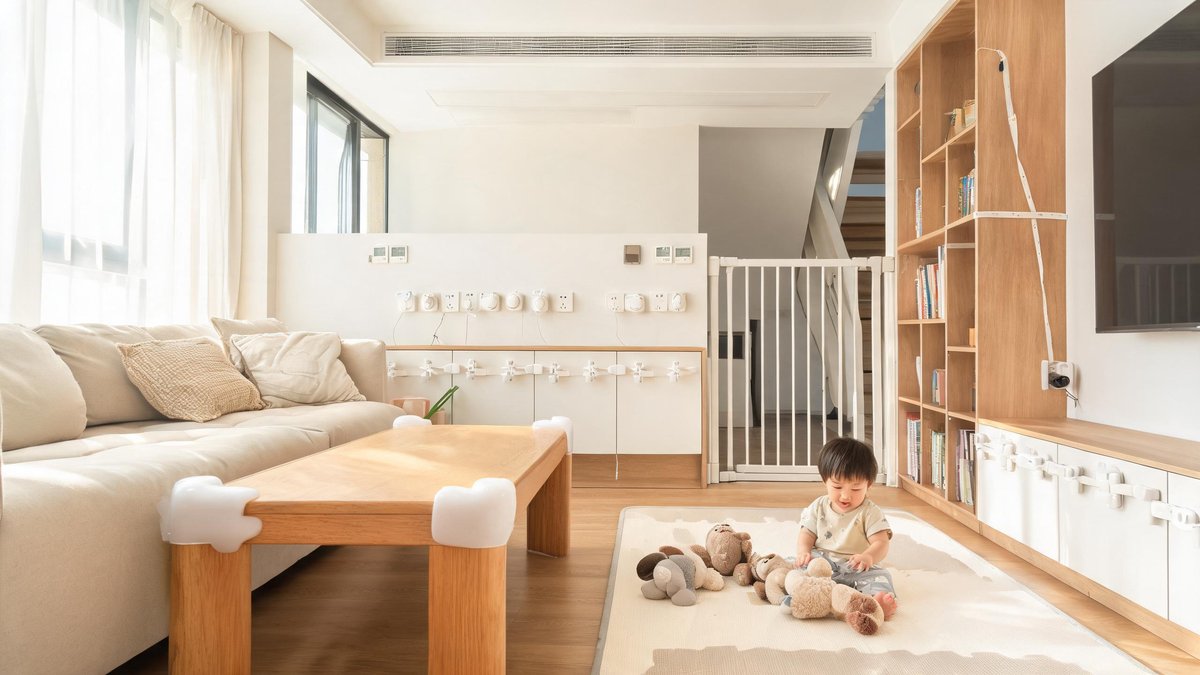
Kids don’t come with an owner’s manual, and your home wasn’t built with a curious crawler in mind. Every year, roughly 2.3 million children under age 5 end up in emergency rooms because of household accidents, according to the Centers for Disease Control and Prevention. Most of those trips are preventable. By tackling one room at a time, you can spot the hidden hazards and install the right safeguards before your little one finds them first. This guide walks you through a practical, room-by-room childproofing plan that you can start this weekend.
Living Room & Family Room: Anchor, Cover, and Contain
The living room looks soft and comfy, but it’s packed with tipping risks and hard edges. A 2021 report from the Consumer Product Safety Commission found that a child visits the ER every 45 minutes because of a television or furniture tip-over. Start by securing every heavy piece of furniture. You’ll need anti-tip straps for bookcases, dressers, and your TV stand. Even if you think a shelf feels sturdy, a toddler pulling up on it can shift the center of gravity in a split second. Don’t wait until you see wobbling.
After anchoring, look at the corners and cords. Coffee tables and hearths sit right at forehead height for a new walker. Soft, adhesive corner guards absorb the impact when your child takes an inevitable tumble. Then tackle the electronics jungle behind the TV. Bundle loose cords with a cable sleeve or wind-up box. Loose wires invite yanking, and a dangling laptop cord can send a lamp crashing down. You can also mount power strips to the back of the console so they’re out of sight and out of reach. Finally, contain the small stuff. Remote controls, spare coins, and decorative pebbles from that potted plant are all choking hazards. Walk through on your hands and knees—literally—to see what’s within grasp from a child’s eye level, then relocate those items to a closed basket or a high shelf. That low viewpoint reveals things you’d never notice standing up.
Kitchen: Lock It High, Stow It Low
The kitchen holds more hidden dangers than any other room. Burn accidents send over 300 children to emergency departments daily in the U.S., and scalds from hot liquids are the most common culprit. The first move is to get magnetic or spring-loaded cabinet locks on every lower door and drawer that contains cleaning supplies, sharp utensils, or plastic bags. Traditional latch locks work fine, but magnetic systems let you unlock them with a key kept far up on the fridge—so you don’t fight a plastic clamp while cooking.
Design Tip: Replacing carpet with hardwood floors yields a 70-80% ROI on average and increases buyer interest by 50% according to the National Association of Realtors.
Next, push potential fire and scald sources out of reach. Turn pot handles in toward the back of the stove every single time. Better yet, cook on the rear burners whenever possible. A stove knob cover set costs less than $15 and stops your toddler from accidentally turning on a gas burner. For the oven, install a latch that prevents the door from opening fully until you release it. Don’t forget the dishwasher: it holds sharp knives and detergent pods at easy grab height. Always point knife blades downward in the utensil basket and run the load immediately after adding the pod so there’s no temptation. Store dishwashing liquid and tabs in a high cabinet above the counter—not under the sink. Kids can open child-resistant caps if they have enough time, so elevation is your backup defense. Tie up loose appliance cords, too, so a slow cooker doesn’t get tugged off the countertop.
Bathroom: Drain the Danger Zones
A bathroom can turn into a hazard zone in seconds. Drowning is the leading cause of unintentional injury death for children ages 1 to 4, and a young child can drown in as little as one inch of water. Never leave your baby or toddler unattended in the tub, even for “just a moment” to grab a towel. That’s non-negotiable. But there are passive steps you can take before bath time even starts. Install a faucet cover—a soft, blow-up or silicone shape that slips over the spout to prevent bumps and burns. Set your water heater thermostat to 120 degrees Fahrenheit or lower. At 140 degrees, it takes only three seconds of exposure to cause a serious scald in young skin.
The toilet needs its own lock. An open lid is a climbing and drowning risk for curious crawlers. A simple external latch you press to release costs about ten bucks and works on most standard bowls. Keep all medications, vitamins, and even toothpaste in a locked medicine cabinet or a high linen closet. It’s easy to forget that children’s vitamins and gummy supplements often look like candy; an overdose can be toxic. Put a hook-and-eye latch high on the bathroom door so you can keep it closed when the room isn’t in use. Non-slip mats inside and outside the tub are your last line of defense against slips. Check the suction cups regularly—mold builds up quickly and weakens their grip.
Nursery & Bedrooms: Build a Safe Sleep Zone
You spend more time carefully decorating a nursery than assessing its safety, but the crib alone causes nearly 10,000 injuries per year from falls and entrapment. Keep the crib bare: a firm mattress with a fitted sheet and nothing else. Bumpers, blankets, pillows, and stuffed animals raise the risk of suffocation and sudden infant death syndrome (SIDS). Position the crib away from windows, blinds, and any cords. Every year, over 600 children are treated in ERs for window-blind cord strangulation. Cordless window coverings are a must in any room where a child sleeps or plays.
Secure furniture and dressers with the same anti-tip brackets you used in the living room. Even a lightweight changing table can tip when a determined toddler climbs the open drawer. Use plug covers on every unused outlet—choose the sliding plate style rather than the tiny plug-in caps, which can become a choking hazard when removed. Toy storage in bedrooms often turns chaotic, so skip any chest or bin with a heavy, free-falling lid. Look for toy boxes with a lid support that holds it open at any angle to prevent slammed fingers and trapped heads. As your child grows, you’ll need to lower the crib mattress. Do this the moment they can sit up, and again when they start pulling up to stand. By the time they’re climbing out, it’s time to switch to a toddler bed or a mattress on the floor. That transition often happens around age 2—some kids push that boundary even earlier.
Stairs, Hallways & Doors: Gates, Guards, and Gaps
Stairs are an obvious risk, but the right gate depends on where it goes. Pressure-mounted gates work fine between two rooms on the same level, but never use one at the top of a staircase. Only a hardware-mounted, screw-in gate gives you the security you need to prevent a tumble down the steps. A study from the American Academy of Pediatrics noted that baby gate misuse accounts for roughly 1,800 injuries annually, often because parents install the wrong type or fail to secure the gate completely. Check the latch daily—it can work loose over time.
Pinch guard strips slip over door hinges and prevent little fingers from getting caught when a door closes. Door knob covers on rooms you don’t want your child accessing—such as the cleaning closet or the basement—add a layer of safety without permanent modifications. Pay attention to the gap between banister railings. If a railing has openings wider than four inches, your child can slip through or get a head stuck. Clear plastic banister guards zip-tie on and close off those gaps neatly. Hallway nightlights with motion sensors help toddlers navigate to your room or the bathroom in the dark without tripping, but place them out of reach so your child can’t unscrew the bulb or yank the plug. Finally, the door itself: if a bedroom or bathroom door has a privacy lock that can be engaged from inside, keep a small door-unlock tool on top of the doorframe. You’ll be grateful you did when your preschooler locks herself in.
Safety Tools Every Home Should Own
While you’re moving room to room, keep a running list of universal items that work everywhere. Carbon monoxide detectors should sit on every floor and outside every sleeping area. Smoke detectors need testing monthly; the U.S. Fire Administration reports that three out of five home fire deaths happen in properties without working smoke alarms. Check batteries when you change your clocks, and replace the entire unit every ten years.
Outlet covers, cord shorteners, and edge guards are your bread and butter. Keep a small emergency kit accessible but locked: it should include a list of poison control numbers, cell phone charger, basic first aid supplies, and a flashlight. Walk through your home with the checklist below once a month. Your child’s abilities change fast, and what was safe last month might not be safe today. Childproofing isn’t a one-time project—it’s a habit that evolves as your little explorer grows.