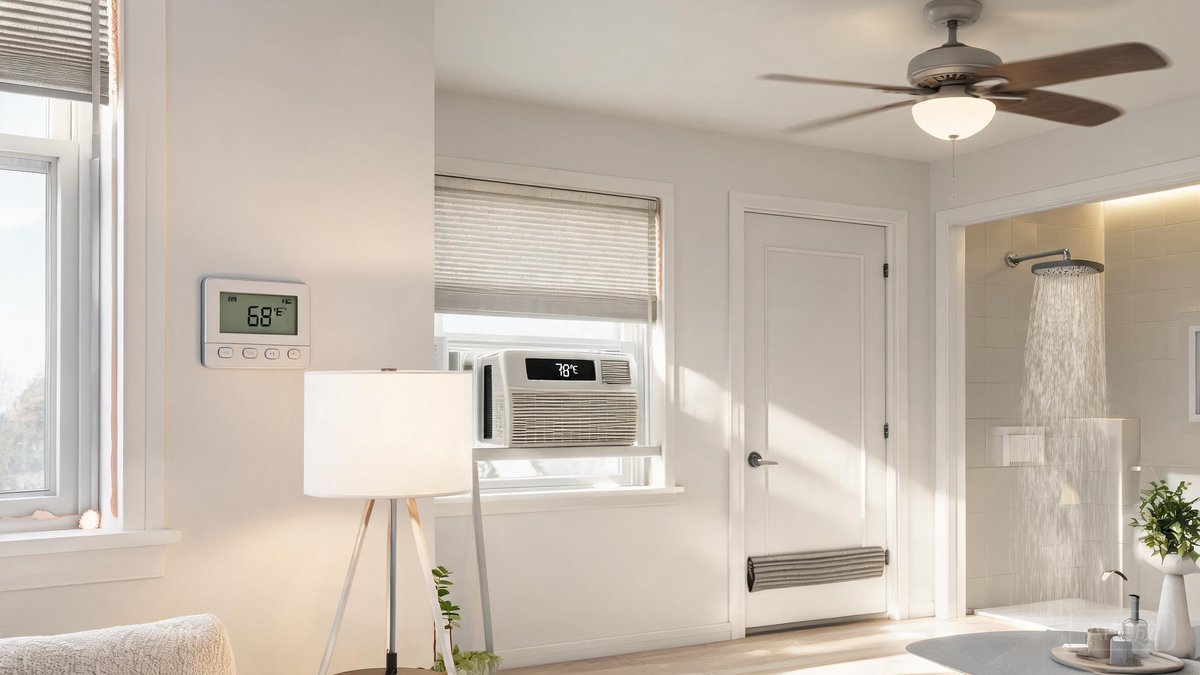
Between seasonal extremes, rising electricity rates, and drafty rooms, home energy bills never really let up. The good news: you don't need a full gut renovation or a bank-breaking solar array to cut costs. A handful of targeted changes—many under $50—can trim your monthly bill by 10% to 30% and make your home feel more comfortable year-round. Here's how to do it.
Audit Your Home's Energy Leaks Before You Spend a Dime
You can't fix what you haven't found. Most homes bleed conditioned air through tiny gaps around windows, doors, baseboards, and recessed lights. According to ENERGY STAR, all those pinhole leaks can add up to the equivalent of a 2-foot-by-2-foot window left wide open all winter. The U.S. Department of Energy pegs the potential savings from sealing uncontrolled air leaks at 15% to 20% of your heating and cooling costs. That's hundreds of dollars back in your pocket without buying a single gadget.
Grab an incense stick or a smoke pencil on a windy day and walk your home's perimeter. Hold the smoke near window frames, door sweeps, and electrical outlets on exterior walls. A flickering or drifting plume points straight to a leak. You'll often find the biggest culprits in the attic hatch, rim joists in the basement, and anywhere plumbing or wiring enters the house. Seal small gaps with a high-quality caulk and use expanding foam for openings larger than a quarter inch. Add or replace weatherstripping on doors and windows that don't close tightly. Don't overlook the basement sill plate—a continuous bead of caulk or foam there can stop a surprising amount of airflow.
After your DIY air-sealing blitz, the difference in draftiness will be immediate. Your furnace and air conditioner won't have to fight as hard, and you'll notice steadier temperatures from room to room. Commit to rechecking these spots each fall and spring; materials age, and new gaps can appear as your house settles.
Dial In Your Thermostat Settings and Stop Heating an Empty House
Your thermostat is the simplest money-saving tool you already own. Energy.gov reports that you can save as much as 10% per year on heating and cooling just by turning your thermostat back 7° to 10°F for eight hours a day—think while you're at work or tucked under a thick comforter. For a home that spends $2,000 annually on heating and cooling, that's a $200 reward for pressing a few buttons. A programmable thermostat costs as little as $25 and removes the need to remember the setback every day. Smart thermostats go further: they learn your schedule, use geofencing to drop the temperature when you leave, and generate energy reports that highlight exactly when you're overspending.
Design Tip: According to a UCLA study, clutter raises cortisol levels, especially in women. Decluttering one room per weekend measurably reduces stress within a month.
If you worry about comfort, combine the setback with a small behavioral tweak. In winter, set the daytime occupied temp to 68°F—every degree below that saves another 1% on your fuel bill. At night, aim for 60°F to 62°F. Summer settings work in reverse: keep it at 78°F when you're home and let it rise to 85°F while the house is empty. Use ceiling fans to amplify the effect. A fan set to counterclockwise in summer creates a wind-chill effect that can make 78°F feel like 72°F. In winter, flip the fan's direction switch to clockwise and run it on low; this gently pushes warm air trapped at the ceiling down into the living space, potentially cutting heating demand by up to 10%. You'll slash runtime for your HVAC system without feeling a chill.
Tame the Hidden Energy Hogs Lurking in Your Living Room
Your electronics are sipping power even when they're switched off. Cable boxes, game consoles, coffee makers, and phone chargers all draw standby current. The Natural Resources Defense Council found that always-on devices cost the average U.S. household $100 to $200 per year in wasted electricity. That's a silent drain equivalent to running a second refrigerator you never open.
Attack the phantom load by grouping electronics onto advanced power strips. A smart power strip automatically cuts power to peripheral devices when the main component—say, your TV or computer—turns off. Plug your TV, soundbar, and streaming box into one strip; when you kill the TV, the strip shuts down everything else. Unplug chargers when they're not actively topping off a battery. If you have a rarely used guest room or home office, flip the power strip switch when the room sits empty. Even your modem and router can go on a timer if nobody's streaming or working overnight. The payoff is immediate—shaving off as much as 10% of your monthly kilowatt-hour usage without changing your habits in any visible way.
Stop Treating Your Windows Like Sieves
Glass is a thermal express lane. In winter it conducts heat out; in summer it invites solar gain in. The Department of Energy estimates that well-insulated cellular shades can reduce heat loss through windows by 40% or more when the mercury dips. During a heatwave, those same shades can block up to 80% of unwanted solar heat. Even simple, heavyweight thermal curtains make a measurable dent. For a south-facing room in August, closing drapes can lower indoor temps by several degrees and take a serious load off your air conditioner.
You don't have to live in a dim cave. In cold months, open curtains and blinds on sun-facing windows during the day to let free solar energy warm your floors and furniture. As soon as the sun sets, draw them tight to trap that heat. Install clear low-emissivity (low-E) window film—it's a peel-and-stick product that costs around $15 per window—to reflect heat back inside during winter and block it in summer without sacrificing the view. For drafty single-pane windows, a temporary shrink-wrap film kit stops convection cold and costs less than a pizza. Combine these treatments with the air-sealing work in the first section, and your windows will shift from being a liability to a controllable asset in your energy budget.
Rethink How You Wash, Dry, and Light Your Home
Heating water accounts for roughly 90% of the energy your washing machine uses. ENERGY STAR calculates that switching all loads to cold water can save the average household more than $150 each year. Modern detergents are engineered to bust dirt and stains just as effectively in cold, so there's no reason to pay for hot water unless you're sanitizing heavily soiled items. Skip the heated dry cycle on your dishwasher, too—let the dishes air dry and pocket another $40 annually.
Your dryer burns about $85 worth of electricity for the average family, and a clogged lint screen pushes that higher by restricting airflow. Clean the lint trap before every load and check the exterior vent hood for blockages. If your machine has a moisture sensor, use it; it stops the cycle when clothes are dry instead of running a fixed timer. Better yet, line-dry heavy items like towels and jeans when weather allows. Even partial line-drying can knock up to $30 off your yearly bill.
Overhead, lighting accounts for about 15% of a typical home's electric use. Replacing your five most-used fixtures with ENERGY STAR-certified LEDs uses 90% less energy and lasts 25 times longer than old incandescents. That one swap cuts roughly $75 per year from your bill. Use dimmers, motion sensors in closets, and timers on porch lights to stop lighting empty rooms. Every kilowatt-hour you avoid in the laundry room and under the ceiling light adds up to a noticeably smaller monthly statement.
Keep Your HVAC System Humming Without Overworking It
Your heating and cooling system eats up nearly half of your home's energy budget. Forcing it to push air through a filthy filter ramps up consumption by 5% to 15%. Check filters monthly and swap them at least every three months—more often if you have pets or allergies. A $10 pleated filter is cheap insurance for peak efficiency. Once a year, bring in a technician for a tune-up. Cleaning the coils, checking the refrigerant charge, and calibrating the thermostat can improve system efficiency by up to 15%, according to contractor trade groups. That annual visit almost always pays for itself in fuel savings and longer equipment life.
Don't forget the hidden network of ducts snaking through your attic and basement. ENERGY STAR says the typical house loses 20% to 30% of conditioned air through leaky ductwork before it ever reaches a vent. Spend an afternoon with a roll of foil-backed tape—not cloth duct tape—and mastic sealant. Seal every accessible joint and seam you can find, especially at take-offs and register connections. Wrap ducts that run through unconditioned spaces with R-6 or higher fiberglass insulation. The fix costs under $50 and often delivers a 10% to 20% reduction in heating and cooling load. Between clean filters, a sealed duct run, and an annual pro check, your HVAC will reward you with lower bills, steadier temperatures, and fewer breakdowns year-round.