Smart Storage for Small Spaces: Room by Room Guide
Sarah Reynolds
Updated May 16, 2026 · 9 min read
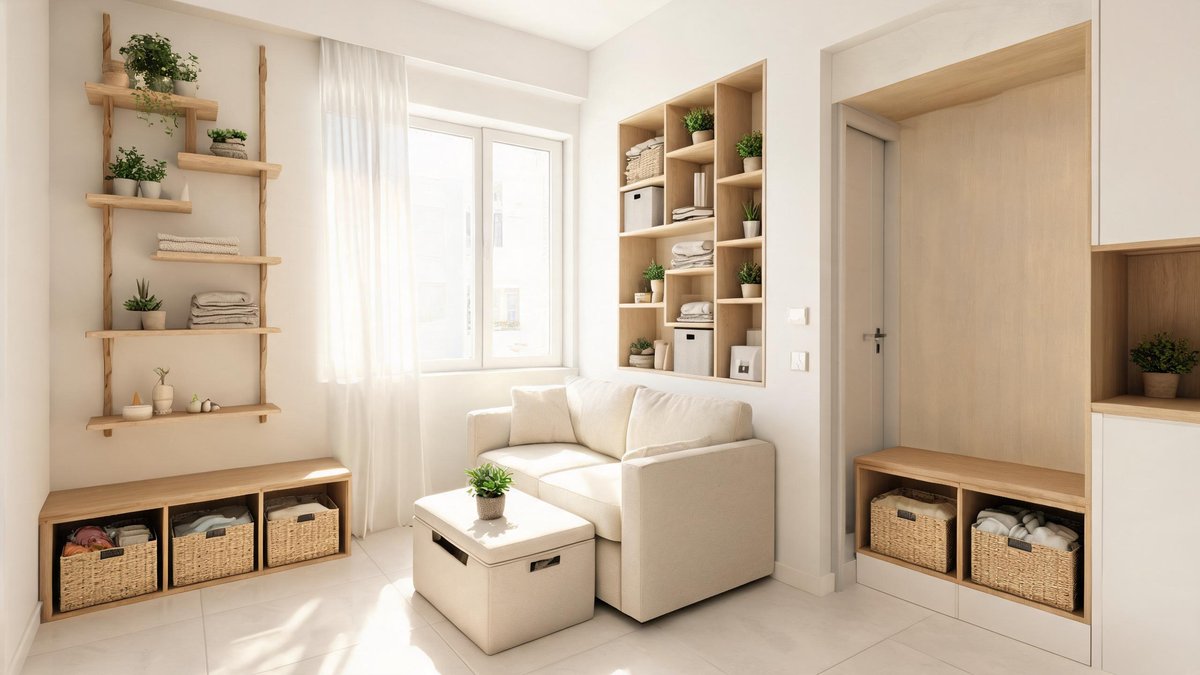
The average American apartment has shrunk by 5% over the past decade while the average household owns more stuff than ever — roughly 300,000 items, according to a 2025 study by the National Association of Professional Organizers. That tension between square footage and possession volume is why storage is the single most-Googled home improvement topic year after year. The good news: most homes, regardless of size, use only about 60% of their available vertical storage capacity. The solutions below unlock the other 40%, room by room, without requiring you to become a minimalist first.
The Psychology of Small-Space Living
Before you buy a single shelf bracket, understand this: small-space storage is not about cramming more cabinets into a room. It is about aligning what you store with how you actually live. A 2024 UCLA study on household clutter found that people in homes under 800 square feet who adopted "first-order retrievability" — where every item is reachable within 5 seconds and visible without moving anything else — reported 28% lower daily stress levels than those who stored items in deep cabinets and stacked bins.
The principle is simple: if you cannot see it, you will not use it, and eventually you will buy a duplicate. Open shelving, clear containers, and labeled zones are not just Instagram trends — they reduce cognitive load. Every morning you spend 8 minutes searching for keys, a specific shirt, or the right spice jar adds up to 49 hours per year, or roughly two full days of your life. Good storage is an investment in time, not just tidiness.
Living Room Storage: Hidden in Plain Sight
The living room is where storage battles are most visible — remotes, books, blankets, kids' toys, pet supplies, and the mail pile all compete for the same flat surfaces. The solution is to go vertical and choose furniture that earns its footprint twice:
Design Tip: Bathroom remodels have a 60-68% ROI nationally. Focus on replacing the vanity, updating the mirror, and adding modern lighting for the biggest impact under $500.
Floating shelves above the sofa: A single 8-foot shelf mounted 12 inches above the back of the sofa provides roughly 6 linear feet of display space for books, framed photos, and small plants — items that would otherwise occupy a side table or coffee table. Use 1x10 pine boards ($12 each) on heavy-duty L-brackets anchored into studs. Weight capacity: 40-60 lbs per bracket pair, more than enough for a full shelf of hardcovers.
Storage ottoman instead of a coffee table: A 30-inch square storage ottoman ($45-80) holds approximately 4.5 cubic feet inside — enough for four throw blankets, six board games, or an entire toddler's toy rotation. It functions as seating, footrest, and table when you add a tray on top. When guests arrive, the chaos disappears in under 30 seconds.
Media console with closed cabinets: Open shelving under a TV looks cluttered within days. A console with solid doors — even basic IKEA Besta units ($60-120) — hides routers, gaming consoles, cable tangles, and DVD collections behind a clean facade. Mount the TV on the wall above it to reclaim the console's top surface entirely. The wall-mount arm itself costs $25-40 and frees up roughly 2 square feet of horizontal space.
Behind-the-sofa console table: If your sofa floats in the room (not against a wall), slide a 6-inch deep console table ($40-70) behind it. The narrow surface holds lamps and charging stations, while the lower shelf hides baskets for remotes, magazines, and charging cables. Nobody sees it from the front of the room — but you access it every time you sit down.
Kitchen Storage: Using Every Square Inch
Kitchens in apartments and older homes are notorious for minimal counter space and awkward cabinet layouts. These five upgrades cost under $150 combined and can increase usable kitchen storage by up to 35%:
Inside-cabinet door racks: The inside face of every cabinet door is dead space waiting to be activated. Adhesive-mounted racks ($8-12 per pair) hold pot lids, cutting boards, plastic wrap boxes, and spice jars. Measure the depth of your cabinet shelf first — the rack must sit shallow enough that the door closes without hitting stored items. A standard upper cabinet door can hold 10-15 spice jars on mounted racks, eliminating the need for a spice drawer.
Magnetic knife strip on the backsplash: A 16-inch magnetic bar ($15-20) mounted to the backsplash or underside of upper cabinets holds 6-8 knives safely and frees an entire drawer. It also keeps blades from dulling against each other in a drawer block. Install at 48 inches from the floor for comfortable reach.
Tension rod dividers in base cabinets: A $12 tension rod placed vertically inside a base cabinet creates an instant divider for baking sheets, cutting boards, and cooling racks. No drilling, no permanent installation. Pull it out and reposition anytime your storage needs change.
Stackable, clear containers for pantry items: Square containers ($25 for a set of 10-12) use 25% less shelf space than round jars because they nest without gaps. Clear acrylic lets you see exactly how much flour, rice, or pasta remains without opening anything. Label the lid, not the front — you read the lid when looking down from above, which is the natural angle when reaching into a cabinet.
Over-the-sink roll-up drying rack: A silicone roll-up rack ($18) spans the sink basin and holds washed produce, drying dishes, or a cutting board mid-prep. It adds 1.5 square feet of temporary counter space exactly where you need it most — between the sink and the stove. When not in use, roll it up and store in a drawer.
Bedroom Storage: Under-Bed and Vertical
The bedroom holds more hidden storage potential than any other room, simply because the bed itself occupies 25-30 square feet of floor space. That footprint should work much harder:
Under-bed rolling bins: A queen bed with 7 inches of clearance underneath provides 20 cubic feet of storage — roughly the capacity of a small dresser. Low-profile plastic bins with wheels ($12-18 each, you need 4-6) slide out easily and store off-season clothing, extra bedding, luggage, and shoes. Avoid fabric under-bed bags; they snag on carpet and collect dust without sealing properly.
Headboard with built-in shelving: If you are in the market for a bed frame, choose one with a shelving headboard ($120-200) or add a narrow bookshelf behind the bed. The top shelf replaces a nightstand for lamps and phones; the lower shelves store books and bedtime essentials. In a room where every nightstand costs a square foot of floor space, eliminating two nightstands frees 4 square feet — enough for a narrow dresser.
Over-door hook racks: The back of a bedroom door supports 30-50 pounds with a simple over-door hook rack ($15-25). Use it for robes, tomorrow's outfit, handbags, or a hanging shoe organizer with clear pockets (great for scarves, belts, and accessories). A 24-pocket organizer stores 12 pairs of shoes without consuming a single inch of closet rod or floor space.
Vacuum storage bags for seasonal rotation: Vacuum-seal bags ($20 for a pack of 6) compress winter coats, down comforters, and sweaters to roughly 25% of their original volume. A bulky down comforter that fills an entire under-bed bin shrinks to the size of a throw pillow. Label each bag with contents and season on masking tape. Rotate bags between under-bed storage and a high closet shelf twice a year — May for winter-to-summer swap, October for the reverse.
Bathroom Storage: Small Room, Big Potential
Bathrooms in apartments average just 40 square feet — the size of a parking space. Every fixture claims territory first, leaving precious little for towel stacks and toiletry stashes. The fix is to think vertically and magnetically:
Over-toilet shelving unit: A freestanding etagere ($35-55) fits over a standard toilet and adds three to four shelves without consuming floor space beyond the toilet's existing footprint (roughly 30x20 inches). The bottom shelf sits above the tank, the middle shelves hold towels and baskets, and the top shelf stores items you reach for less often — extra toilet paper rolls, bath salts, and guest towels.
Wall-mounted magnetic strips: A 12-inch magnetic strip ($10) mounted inside the medicine cabinet door or on a narrow wall section holds tweezers, nail clippers, bobby pins, and metal grooming tools. It keeps the smallest — and most easily lost — items visible and instantly accessible. A second strip at 48 inches from the floor holds children's bath toys out of the tub but within reach.
Corner shower caddies with suction cups: A two-tier corner caddy ($18-30) with industrial suction cups (rated for 15+ lbs) adheres to shower walls without drilling through tile or damaging grout. Look for models with drainage holes in each shelf to prevent the mildew buildup that plagues solid-shelf caddies. Position the lower tier at shoulder height so shampoo bottles are reachable without bending.
Under-sink pull-out drawers: Bathroom vanities often have one deep cabinet with a single shelf — meaning everything in the back is invisible and unreachable. Two-tier pull-out drawer units ($22-35) fit around the plumbing trap and bring the back items to the front. A unit measuring 15 inches deep and 8 inches wide slides out on smooth rails and holds cleaning supplies, hair tools, and spare toiletries.
Multi-Purpose Furniture That Earns Its Footprint
The single most effective storage strategy for small spaces is to stop buying furniture that only does one thing. Every piece should serve at least two functions, and the best pieces serve three. Here is what that looks like in practice:
- Storage bed with drawers: A platform bed with four built-in drawers ($250-400 new, often $100-200 used) replaces both a bed frame and a dresser. Each drawer holds roughly 2.5 cubic feet — collectively more storage than a standard three-drawer nightstand. If a new storage bed is outside your budget, add bed risers ($15) to your existing frame and slide low bins underneath. The 7-inch height gain transforms inaccessible dust-zone into usable cubic footage.
- Expandable dining table: A drop-leaf or butterfly-leaf table ($120-250) seats two to four in daily mode and expands to seat six to eight for gatherings. Closed, it occupies 24x30 inches; open, 48x30 inches. The center cavity in butterfly-leaf designs stores the leaf itself. Wall-mount the table on a hinge ($30 hardware kit) for the ultimate space-saver — it folds flat against the wall when not in use, freeing the entire dining area.
- Nesting side tables: A set of two or three nesting tables ($50-90) provides flexible surface area on demand. Pull them apart when guests need a spot for drinks; tuck them together into the footprint of a single table the other 95% of the time. The smallest table in the set often works as a laptop stand or a kid's art surface.
- Fold-down wall desk: A wall-mounted drop-leaf desk ($60-100 plus the wall anchor hardware) folds up to occupy only 4 inches of depth. Open, it provides a 24x18-inch work surface with a small shelf above for a laptop and notebook. This is the practical solution for studio apartments where a dedicated home office is impossible. Install it in a hallway alcove, the bedroom, or even a wide kitchen wall.
You do not need to implement every idea in this guide at once. Start with the room that frustrates you most — the kitchen with zero counter space, the bedroom where clothes pile on a chair, the bathroom where toiletries tumble every time you open the cabinet. Fix that room first. Live with the changes for two weeks. The daily relief you feel will be the motivation to tackle the next one.
Effective storage is not about buying organizing products until your credit card cries. It is about observing how you actually use a space, identifying the friction points, and designing a home that works with your habits instead of against them. The goal is not a showroom — it is a Sunday morning where you can find the French press, a clean towel, and your running shoes without opening three closets.