Table of Contents
Key Takeaways
- Choose a location with 6-8 hours of direct sunlight for most vegetables
- Loamy, well-draining soil rich in organic matter is ideal for vegetable gardens
- Tomatoes, zucchini, bush beans, and lettuce are easiest for first-time gardeners
- Water deeply 1-2 inches per week rather than shallow daily watering
- Start small with a 4x4 or 4x8 foot bed for your first season
Choosing the Perfect Location
Location determines the success of your vegetable garden more than any other factor. Most vegetables need 6-8 hours of direct sunlight daily. Observe your yard throughout the day to identify spots that receive consistent sun. South-facing areas with no shade from trees or buildings are ideal. Leafy greens like lettuce and spinach tolerate partial shade, but fruiting vegetables like tomatoes, peppers, and squash demand full sun for good production.
Access to water is the second consideration. Gardens need 1-2 inches of water per week, and hauling water by hand becomes tedious quickly. Choose a location within reach of a garden hose or install a rain barrel collection system. Proximity to the house also matters, a garden close to the kitchen is more likely to be visited daily, making it easier to spot pest problems, harvest at peak ripeness, and keep up with watering.
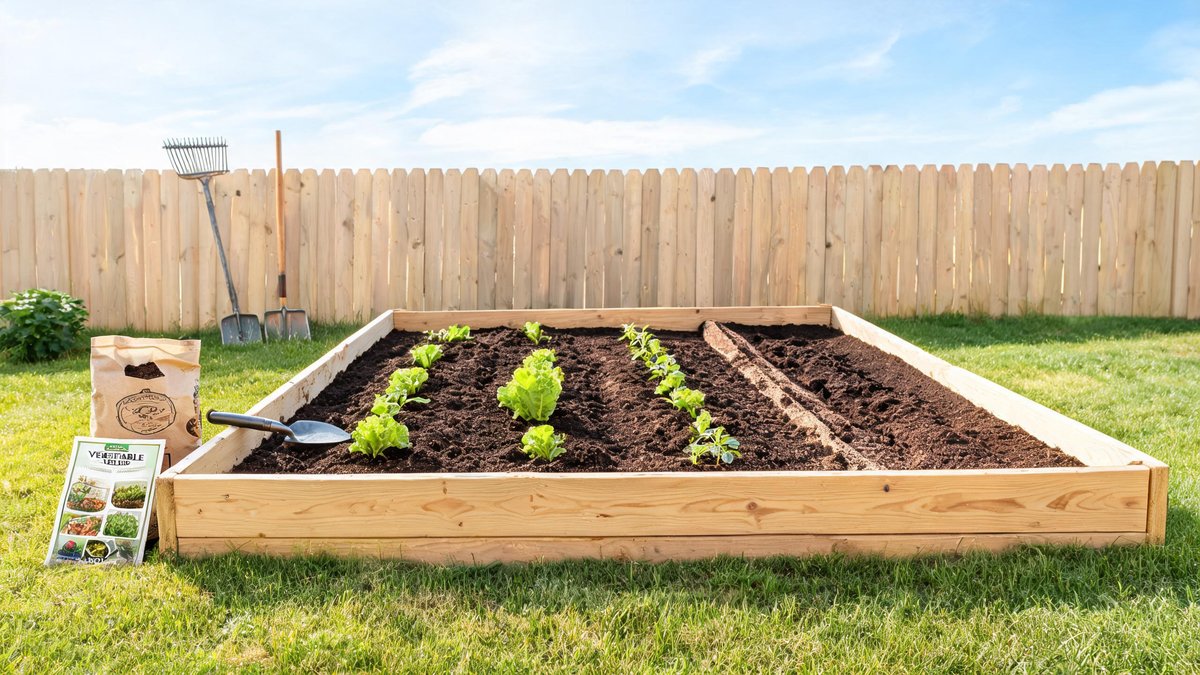
Soil drainage is equally important. Avoid low spots where water pools after rain, as waterlogged soil causes root rot and stunts plant growth. If your yard has poor drainage, consider building raised beds. These warm faster in spring, provide better drainage, and allow you to control soil quality completely. A 4x4 or 4x8 foot raised bed is the perfect size for a beginning gardener and can produce a surprising amount of food.
Preparing Your Soil
Healthy soil is the foundation of a productive vegetable garden. Start by removing grass and weeds from your chosen area. For in-ground gardens, till or dig the soil to a depth of 8-12 inches, breaking up clumps and removing rocks. Mix in 2-3 inches of well-rotted compost or aged manure to improve soil structure and fertility. Compost adds organic matter that improves drainage in clay soils and water retention in sandy soils.
Test your soil pH before planting. Most vegetables prefer slightly acidic soil with a pH between 6.0 and 7.0. Simple test kits from garden centers provide quick results. If your pH is too low, add garden lime to raise it; if too high, add sulfur or peat moss to lower it. Soil tests also reveal nutrient deficiencies. A balanced 10-10-10 fertilizer worked into the soil before planting provides a good nutritional foundation.
For raised beds, fill with a mix of topsoil, compost, and a lightweight medium like peat moss or coconut coir in roughly equal parts. This creates a loose, nutrient-rich growing environment that drains well and warms quickly in spring. Avoid using untreated yard soil in raised beds, as it may contain weed seeds, pests, or pathogens. Top up beds with fresh compost each season to replenish nutrients used by previous crops.
Best Vegetables for Beginners
Starting with easy-to-grow vegetables builds confidence and ensures a satisfying first harvest. Tomatoes are the most popular home garden vegetable for good reason, they are productive, flavorful, and nothing compares to a homegrown tomato. Choose determinate varieties for compact growth or indeterminate varieties for continuous harvest throughout the season. Cherry tomatoes are especially forgiving and productive for new gardeners.
Zucchini and summer squash are remarkably productive, often producing more than a family can eat from just two or three plants. They grow quickly and are relatively pest-resistant. Bush beans are another excellent beginner crop, germinating reliably and producing a harvest in just 50-60 days. They also improve soil fertility by fixing nitrogen. Lettuce and other leafy greens grow quickly, allow cut-and-come-again harvesting, and tolerate cooler temperatures that would damage warm-season crops.
Radishes are the fastest vegetable from seed to harvest, often ready in just 25-30 days, making them perfect for impatient beginners. Carrots require loose, rock-free soil but are otherwise low-maintenance. Peas planted in early spring produce sweet pods before summer heat arrives. Cucumbers and peppers are slightly more demanding but still manageable for beginners with consistent care. Start with 4-5 vegetable types your first season to avoid overwhelm.
Seeds vs. Seedlings: Which to Choose
Gardeners can start vegetables from seeds or purchase young plants from nurseries. Each approach has advantages. Seeds offer greater variety, lower cost, and the satisfaction of growing from the very beginning. A $3 seed packet contains dozens of plants, while a nursery seedling of the same variety costs $3-5 each. Many vegetable varieties are only available as seeds, particularly heirloom and specialty types.
Seedlings provide a head start and reduce the complexity of early-season care. For warm-season crops like tomatoes and peppers in short-summer climates, using transplants is almost essential for a successful harvest. Nurseries also eliminate the need for indoor seed-starting equipment like grow lights and heat mats. The trade-off is higher cost and fewer variety choices.
A practical strategy is to combine both: start easy, fast-growing crops like beans, peas, radishes, carrots, and squash from seed directly in the garden, and purchase seedlings of more demanding crops like tomatoes, peppers, and broccoli. Follow seed packet instructions for planting depth and spacing. Most seed packets include essential information about days to maturity, sun requirements, and spacing that guides successful planting.
Watering and Fertilizing Schedule
Consistent watering is critical for vegetable garden success. Most vegetables need 1-2 inches of water per week, including rainfall. Water deeply and less frequently to encourage deep root growth. Shallow, frequent watering promotes shallow roots that are vulnerable to drought stress. Morning watering is ideal, as it allows foliage to dry during the day, reducing the risk of fungal diseases that thrive on overnight wet leaves.
Drip irrigation or soaker hoses deliver water directly to the root zone, minimizing evaporation and keeping foliage dry. This reduces water usage by 30-50 percent compared to overhead sprinklers and significantly reduces disease pressure. Mulching with straw, shredded leaves, or grass clippings helps retain soil moisture, suppresses weeds, and moderates soil temperature. Apply a 2-3 inch layer around plants after the soil has warmed in spring.
Fertilize vegetables according to their growth stage. Apply a balanced fertilizer at planting time, then side-dress with nitrogen-rich fertilizer when plants begin active growth. Tomatoes and peppers benefit from a phosphorus boost when flowers appear, which supports fruit development. Organic fertilizers like fish emulsion, compost tea, and worm castings provide gentle nutrition without risk of burning roots. Stop fertilizing about two weeks before the first expected frost to allow plants to harden off.
Natural Pest Management
Pest problems are inevitable in any garden, but chemical pesticides should be a last resort. The most effective pest management strategy is prevention through healthy soil, proper spacing for air circulation, and crop rotation. Rotating vegetable families from year to year prevents soil-borne diseases and interrupts pest life cycles. Avoid planting tomatoes, peppers, and eggplants in the same spot two years in a row, as they share similar disease vulnerabilities.
Companion planting uses specific plant combinations to deter pests naturally. Basil planted near tomatoes repels tomato hornworms and improves flavor. Marigolds repel nematodes and many insect pests. Nasturtiums act as trap crops for aphids, drawing them away from your vegetables. Dill and fennel attract beneficial insects like ladybugs and lacewings that prey on common garden pests.
Physical barriers provide excellent pest protection without chemicals. Floating row covers made of lightweight fabric exclude insects while letting light and water through. Copper tape around raised beds deters slugs and snails. Hand-picking larger pests like tomato hornworms and squash bugs is effective for small gardens. Insecticidal soaps and neem oil offer natural control for aphids and mites when needed. The Old Farmer's Almanac gardening guide provides detailed pest identification and organic control methods for every region.
Frequently Asked Questions
When should I start my vegetable garden?
Timing depends on your climate zone. Cool-season crops like peas and lettuce go in early spring. Warm-season crops like tomatoes and peppers go in after the last frost date.