Table of Contents
Key Takeaways
- Tomatoes, peppers, lettuce, herbs, and bush beans are excellent container choices
- Most vegetables need at least 5-gallon containers for healthy root development
- Use lightweight potting mix designed for containers rather than garden soil
- Containers dry out faster than in-ground gardens and may need daily watering
- Vertical gardening maximizes yield by growing upward rather than outward
Choosing the Right Containers
Container selection is the foundation of successful balcony gardening. Size matters more than material, larger containers hold more soil, retain moisture longer, and provide stable temperatures for root systems. Most vegetables need at least 5-gallon containers for healthy development. Cherry tomatoes and compact pepper varieties can manage in 3-gallon pots, while herbs and leafy greens thrive in 1-2 gallon containers.
Material choices include terracotta, ceramic, plastic, fabric grow bags, and wooden planters. Terracotta and unglazed ceramic are porous and allow airflow but dry out quickly, requiring more frequent watering. Plastic and glazed ceramic retain moisture well but can overheat in direct sun. Fabric grow bags provide excellent drainage and air pruning for roots but also dry out rapidly. Wooden planters offer good insulation for roots but may rot over time without a liner.
Drainage is critical. Every container must have drainage holes at the bottom. Elevate pots on pot feet or bricks to allow water to escape freely. Avoid the common mistake of adding gravel at the bottom of pots, which actually raises the water table and can cause root rot. Instead, use a quality potting mix that drains well while retaining enough moisture for healthy growth. Self-watering containers with built-in reservoirs are excellent for busy gardeners as they reduce watering frequency.
Best Crops for Balcony Gardens
Not all vegetables adapt well to container life. The best balcony crops are compact, productive, and tolerant of the confined root space. Cherry tomatoes are the most rewarding balcony crop, producing sweet fruit throughout summer. Choose determinate or dwarf varieties like Tiny Tim, Tumbling Tom, or Patio Princess that stay under 24 inches tall and do not require extensive staking.
Peppers thrive in containers and produce prolifically in warm, sunny locations. Bell peppers, jalapenos, and Thai chili peppers all perform well in 5-gallon pots. Leafy greens like lettuce, spinach, and arugula are among the easiest balcony crops, growing quickly in shallow containers and allowing multiple harvests through cut-and-come-again harvesting. Bush beans, peas, and cucumbers bred for compact growth also produce well in containers.
Herbs are the most space-efficient balcony crop. Basil, mint, rosemary, thyme, oregano, and chives grow well in small pots and provide fresh flavors for cooking throughout the season. Place herbs closest to the kitchen for easy access. Perennial herbs like rosemary and thyme will return year after year if overwintered properly. Annual herbs like basil should be replanted each spring for the best flavor and yield.
Soil, Fertilizer, and Potting Mix
Using garden soil in containers leads to poor drainage and compacted roots. Instead, use a lightweight, well-draining potting mix designed for containers. Quality potting mixes contain peat moss or coconut coir for moisture retention, perlite or vermiculite for drainage, and compost for nutrients. Avoid mixes with added synthetic fertilizers, as they can burn tender roots and contribute to nutrient runoff.
Container vegetables need regular feeding because nutrients wash out with frequent watering. A balanced, water-soluble fertilizer applied every two weeks during the growing season keeps plants productive. Organic options like fish emulsion, seaweed extract, and compost tea provide gentle, slow-release nutrition. Slow-release fertilizer pellets mixed into the soil at planting time provide a steady nutrient supply for the entire season.
Soil pH affects nutrient availability. Most vegetables prefer a pH between 6.0 and 7.0. Test your potting mix pH with a simple test kit from any garden center. If the pH is too low, add garden lime; if too high, add sulfur or peat moss. Replacing potting mix annually is recommended, as used mix loses structure and may harbor disease pathogens. Old mix can be composted or used as fill in non-edible garden beds.
Watering Strategies for Small Spaces
Container gardens dry out faster than in-ground gardens, making watering the most critical maintenance task. Check soil moisture daily by inserting your finger an inch into the soil. If it feels dry at that depth, it is time to water. In hot weather, large containers may need watering once daily, while small pots may need watering twice. Morning watering is best, as it allows moisture to reach roots before the sun evaporates it.
Water deeply until it runs out of the drainage holes, ensuring the entire root ball is moistened. Shallow watering encourages shallow roots that are more vulnerable to drought stress. Using saucers under pots catches excess water but should not be left full, as standing water promotes root rot. Elevate pots on pebbles in the saucer to keep roots above the collected water.
Self-watering containers with wicking systems can extend watering intervals to 3-5 days, making them ideal for weekend gardeners or hot climates. Drip irrigation systems designed for container gardens automate watering entirely, delivering precise amounts of water to each pot on a timer. Adding a 2-inch layer of mulch on top of the soil, such as straw, shredded bark, or coconut coir, significantly reduces evaporation and keeps soil temperatures stable.
Vertical Gardening: Growing Up, Not Out
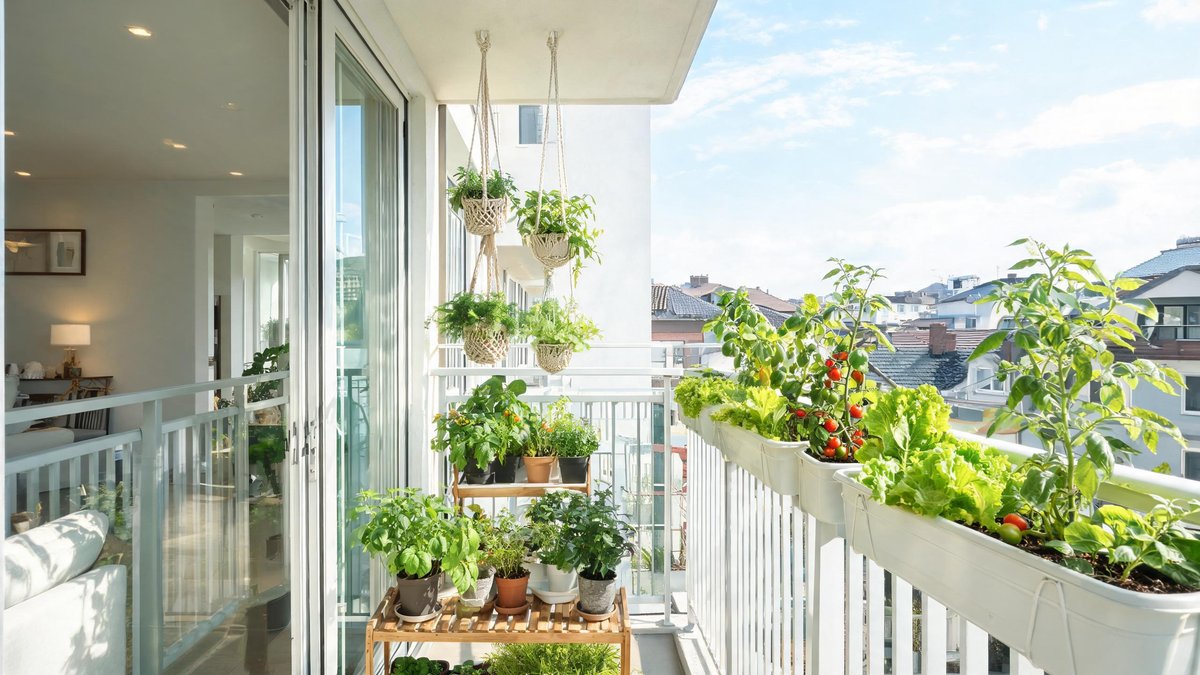
Vertical gardening is the key to maximizing yield in limited balcony space. By training plants to grow upward rather than spreading outward, you can multiply your growing area several times over. Trellises, cages, stakes, and wall-mounted planters all serve this purpose. A single 4-foot trellis can support cucumbers, pole beans, or small melons that would otherwise require three times the floor space.
Cucumbers, pole beans, peas, and indeterminate tomatoes are natural climbers that thrive with vertical support. Use stakes or tomato cages for determinate plants, and use trellises or netting for climbing varieties. Train vines by gently weaving them through the support structure as they grow. Vertical growing also improves air circulation around plants, reducing the risk of fungal diseases common in humid balcony environments.
Wall-mounted pocket planters and hanging baskets add growing space without using floor area. Strawberry towers, herb walls, and vertical gutter gardens are creative ways to grow food on railings and walls. Ensure wall planters are securely mounted and can support the weight of wet soil. For renters, freestanding vertical planters and tiered shelving units provide vertical growing without drilling into walls.
Sunlight and Microclimate Management
Sunlight is the most limiting factor for balcony gardens. Most fruiting vegetables, including tomatoes, peppers, and cucumbers, need 6-8 hours of direct sunlight daily for good production. Leafy greens and herbs tolerate partial shade, requiring 3-4 hours of direct sun or bright indirect light. Observe your balcony throughout the day to understand its sun pattern before choosing crops.
Balconies create unique microclimates that differ from ground-level gardens. South-facing balconies receive the most sunlight and are ideal for sun-loving vegetables. West-facing balconies get strong afternoon sun, suitable for most vegetables with adequate watering. East-facing balconies provide gentle morning sun, ideal for leafy greens and herbs. North-facing balconies receive the least direct light and are best for shade-tolerant ornamentals rather than vegetables.
Wind is another factor that affects balcony gardens. High winds can damage plants, dry out soil rapidly, and stress tender seedlings. Use windbreaks like lattice screens, bamboo shades, or tall plants to protect more vulnerable crops. Reflective surfaces like light-colored walls can increase light availability for plants in partially shaded areas. Avoid placing plants near air conditioning exhaust units or heat vents, as the dry air can damage leaves. For more detailed guidance, the Old Farmer's Almanac container gardening guide is an excellent resource.
Frequently Asked Questions
What vegetables grow best in containers?
Tomatoes, peppers, lettuce, herbs, and bush beans are excellent container choices. Cherry tomatoes and compact pepper varieties perform particularly well on balconies.