Table of Contents
Key Takeaways
- Natural cleaning products made from vinegar, baking soda, and essential oils are effective for most routine household cleaning tasks
- Homemade cleaners cost 50 to 80 percent less than commercial alternatives while reducing plastic waste and exposure to harsh chemicals
- Vinegar should never be used on natural stone, hardwood floors, or cast iron surfaces due to its acidic properties
- Essential oils like tea tree, lemon, and lavender provide antimicrobial benefits and natural fragrance without synthetic perfumes
- Most DIY cleaning solutions last 2 to 4 weeks when stored properly in labeled, airtight containers away from sunlight
Why Switch to Natural Cleaning Products
Making the switch to natural cleaning products benefits your health, your wallet, and the environment simultaneously. Conventional cleaning products contain a range of chemicals that can irritate skin, eyes, and respiratory systems. Ingredients like ammonia, chlorine bleach, phthalates, and synthetic fragrances are linked to indoor air pollution levels that can be two to five times higher than outdoor air, according to environmental health research. Children and pets are particularly vulnerable to these chemicals because they spend more time on floors and surfaces where residues accumulate.
The cost savings of DIY natural cleaners are substantial. A 16-ounce bottle of commercial all-purpose cleaner costs $3 to $5, while the same amount of homemade cleaner costs roughly $0.50 to $1.00 when you factor in the per-use cost of vinegar, baking soda, and essential oils. A family that switches all their cleaning products to DIY versions saves $200 to $400 per year while also eliminating dozens of single-use plastic bottles from their household waste stream. The ingredients themselves have multiple uses beyond cleaning, so you eliminate the need for dozens of specialized products taking up cabinet space.
Effectiveness is a common concern, and the evidence shows that natural cleaners handle the vast majority of household cleaning tasks. Vinegar is a mild acid that dissolves mineral deposits, cuts grease, and kills some bacteria and mold. Baking soda is a gentle abrasive that scrubs without scratching. Hydrogen peroxide is an effective disinfectant. Castile soap cleans without synthetic surfactants. According to the Wikipedia article on vinegar, its acetic acid content makes it a useful household cleaner with antimicrobial properties, though it is not a registered disinfectant for medical-grade sanitation.
Essential Ingredients for Your Natural Cleaning Kit
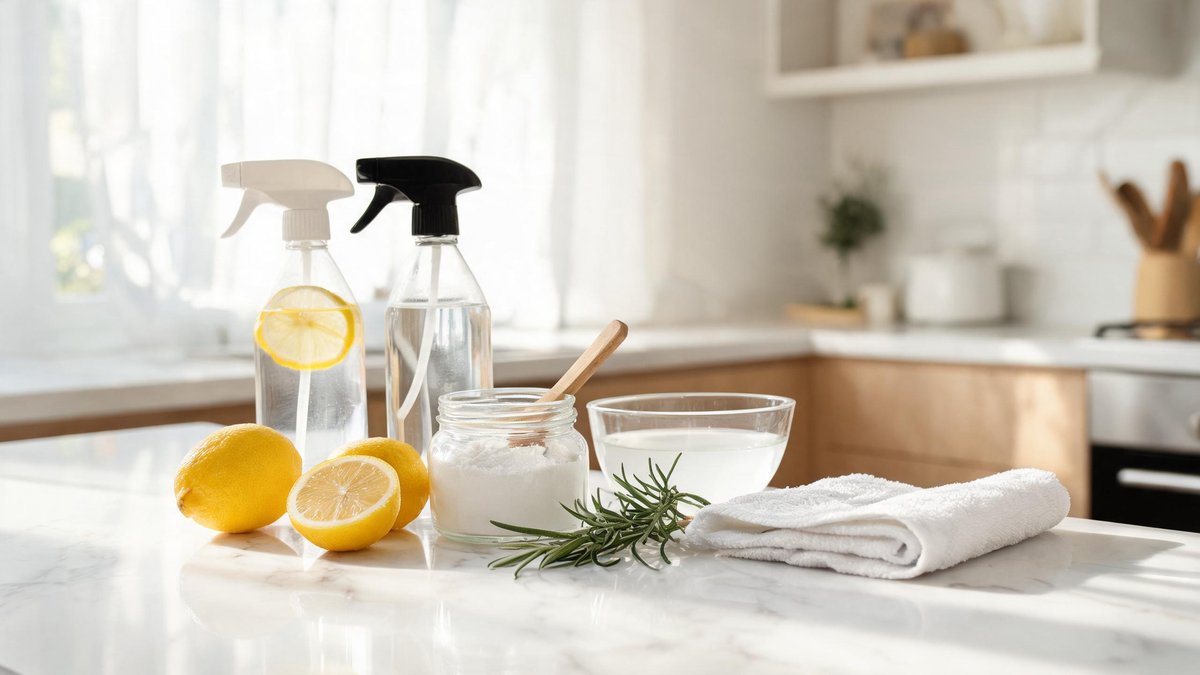
Building a natural cleaning kit requires surprisingly few ingredients, most of which you may already have in your pantry. White distilled vinegar is the cornerstone of natural cleaning. It dissolves hard water deposits, cuts through grease, eliminates odors, and kills certain bacteria and mold spores. Choose white vinegar rather than apple cider or wine vinegar, as the higher acidity and colorless nature make it more effective and versatile for cleaning purposes. A gallon of white vinegar costs roughly $3 and lasts for months of heavy cleaning.
Baking soda is the second essential ingredient. Its mild abrasive properties make it perfect for scrubbing sinks, tubs, and stovetops without scratching surfaces. Baking soda also absorbs odors in refrigerators, carpets, and trash cans. When combined with vinegar, the fizzy reaction helps dislodge debris from drains and grout lines, though the cleaning power comes from the mechanical action of the bubbles rather than any chemical reaction. A large box of baking soda costs about $2 and replaces multiple specialized cleaning powders.
Other key ingredients include Castile soap, a vegetable-based soap concentrate that works as a gentle all-purpose cleaner, hand soap, and dish soap. Hydrogen peroxide (3 percent solution) serves as a color-safe bleach alternative and disinfectant for cutting boards and countertops. Washing soda (sodium carbonate) boosts the cleaning power of laundry detergents and removes tough stains. Lemon juice provides natural bleaching and grease-cutting properties along with a fresh scent. Essential oils like tea tree, lavender, lemon, eucalyptus, and peppermint add antimicrobial benefits and natural fragrance without synthetic perfumes.
All-Purpose Cleaner Recipes
The most versatile DIY cleaner is a simple vinegar and water solution that handles countertops, glass, mirrors, and most sealed surfaces. Mix equal parts white vinegar and water in a spray bottle, adding 15 to 20 drops of lemon or tea tree essential oil for antimicrobial properties and fragrance. Shake well before each use. Spray the surface and wipe with a microfiber cloth for streak-free results. This solution cuts grease, removes fingerprints, and leaves surfaces clean without chemical residue. Do not use this solution on granite, marble, or other natural stone surfaces.
For a gentle all-purpose scrub, combine half a cup of baking soda with enough liquid Castile soap to form a paste. Add 10 drops of essential oil for fragrance. Apply the paste to surfaces with a damp sponge, scrub gently, and rinse with water. This scrub works beautifully on sinks, tubs, ceramic cooktops, and stainless steel appliances. For tough baked-on food residue, let the paste sit for 10 to 15 minutes before scrubbing. The baking soda provides gentle abrasion while the Castile soap lifts grease and food particles without scratching.
A glass and mirror cleaner can be made by mixing one cup of water, one cup of white vinegar, and one tablespoon of rubbing alcohol in a spray bottle. The alcohol helps the solution evaporate quickly, reducing streaks on glass surfaces. Spray lightly onto mirrors and windows, then wipe with a lint-free microfiber cloth using a circular motion followed by vertical strokes. For best results, clean windows on a cloudy day rather than in direct sunlight, which causes the solution to dry too quickly and leave streaks.
Specialized Cleaners for Kitchen and Bathroom
The kitchen requires specialized cleaning solutions for different surfaces and tasks. For kitchen counters, a vinegar and water solution with tea tree oil works well for daily cleaning. For disinfecting cutting boards after raw meat preparation, use 3 percent hydrogen peroxide directly on the surface, letting it sit for 5 minutes before rinsing. Alternatively, sprinkle baking soda on the cutting board and spray with vinegar, letting the fizzy reaction clean for several minutes before scrubbing and rinsing. Cast iron pans should never be cleaned with vinegar, as the acid damages the seasoning. Instead, scrub with coarse salt and a stiff brush, then rinse with water and dry immediately.
Bathroom cleaning benefits from several targeted DIY solutions. For toilet bowls, sprinkle baking soda generously into the bowl, add a few drops of tea tree essential oil, then spray with vinegar. Let the mixture fizz for 10 to 15 minutes before scrubbing with a toilet brush and flushing. This combination deodorizes, cleans, and provides antimicrobial action without bleach fumes. For showerheads with mineral buildup, fill a plastic bag with equal parts vinegar and water, secure it over the showerhead with a rubber band, and let it soak overnight. Remove the bag in the morning and run the shower for a few minutes to clear the dissolved deposits.
Mold and mildew in bathroom grout can be treated with a hydrogen peroxide solution. Spray 3 percent hydrogen peroxide directly onto affected areas, let it sit for 30 minutes, then scrub with a stiff brush. For stubborn mold, make a paste of baking soda and hydrogen peroxide, apply it to the grout lines, and let it sit for an hour before scrubbing. Keeping the bathroom well-ventilated with an exhaust fan during and after showers is the most effective long-term prevention for mold and mildew growth.
Natural Laundry Solutions
DIY laundry products are among the easiest and most cost-effective natural cleaners to make. A simple laundry detergent can be made by grating one bar of natural Castile soap and mixing it with one cup of washing soda and one cup of baking soda. Use one to two tablespoons per load, depending on soil level. This powder detergent works in all standard washing machines including high-efficiency models, costs roughly $0.05 per load compared to $0.25 for commercial detergents, and leaves clothes clean without synthetic fragrances or optical brighteners.
For stain removal, a paste of baking soda and water applied to fresh stains and left for 15 to 30 minutes before washing handles most food and grass stains effectively. For grease stains, apply a small amount of liquid Castile soap directly to the stain, rub gently, and let it sit for 10 minutes before washing. White vinegar added to the rinse cycle (half a cup per load) acts as a natural fabric softener, removes detergent residue, and helps brighten colors. The vinegar smell disappears completely once the clothes are dry.
Oxygen bleach made from hydrogen peroxide provides a color-safe alternative to chlorine bleach for whitening and stain removal. Add one cup of 3 percent hydrogen peroxide to the bleach dispenser or directly to the wash water for white and colorfast garments. For whitening dingy white clothes, soak them in a solution of hot water and half a cup of hydrogen peroxide for 30 minutes before washing. Never mix hydrogen peroxide with vinegar in the same load, as the combination creates peracetic acid, which can be irritating to skin and eyes.
Safety Tips and Storage Guidelines
While natural cleaners are generally safer than commercial chemical products, they still require proper handling and storage. Always label every bottle with its contents and the date it was mixed. Store cleaning products out of reach of children and pets, even natural ones. Essential oils are concentrated plant extracts that can cause skin irritation, eye damage, and digestive problems if ingested. Keep them in their original bottles with child-resistant caps, and never leave undiluted essential oils where children can access them.
Never mix different cleaning solutions together unless you are following a tested recipe. Mixing vinegar with hydrogen peroxide creates peracetic acid, a respiratory irritant. Mixing vinegar with baking soda neutralizes both ingredients, creating mostly water and sodium acetate with no cleaning power beyond the initial fizzy mechanical action. Keep your DIY cleaners in glass spray bottles rather than plastic, as essential oils can degrade certain plastics over time. Dark glass bottles provide additional protection against light degradation and extend the shelf life of essential oil-based solutions.
Discard any cleaning solution that develops cloudiness, separation, an off smell, or visible mold growth. Most vinegar-based solutions last 2 to 4 weeks at peak effectiveness. Solutions containing fresh lemon juice should be used within one week, as the juice can spoil. Dry ingredients like baking soda and washing soda should be stored in airtight containers in a cool, dry place to prevent clumping. With proper storage and rotation, your natural cleaning kit saves money, reduces waste, and keeps your home clean without exposing your family to unnecessary chemicals.