Table of Contents
Key Takeaways
- Snake plants, ZZ plants, pothos, and peace lilies thrive in low-light conditions and remove common indoor air pollutants
- NASA's Clean Air Study identified several houseplants that effectively filter benzene, formaldehyde, and trichloroethylene from indoor air
- Pet owners should choose spider plants, Boston ferns, or areca palms, as many popular air-purifying plants are toxic to cats and dogs
- One plant per 100 square feet is needed for meaningful air quality impact in a typical home
- Plants also improve indoor humidity, reduce stress, and boost productivity beyond their air-purifying capabilities
The Science Behind Air-Purifying Plants
The concept of using plants to clean indoor air gained mainstream attention following NASA's 1989 Clean Air Study, which investigated ways to purify air in sealed space stations. Researchers discovered that common houseplants could remove significant amounts of volatile organic compounds (VOCs) including benzene, formaldehyde, trichloroethylene, xylene, and ammonia from sealed chambers. These VOCs are emitted by everyday household items such as paint, furniture, cleaning products, and synthetic fabrics, and prolonged exposure has been linked to various health concerns including headaches, dizziness, and respiratory irritation.
Plants remove these pollutants through two primary mechanisms. First, leaves absorb gases through tiny openings called stomata during normal respiration and photosynthesis. Once inside the leaf, microbes living on the plant's tissues break down the pollutants into harmless byproducts. Second, the root zone and soil microorganisms play an even larger role, breaking down VOCs that diffuse into the potting mix. This dual-action system makes potted plants significantly more effective at air purification than cut flowers or hydroponic arrangements without soil.
It is important to note that while NASA's results were impressive under laboratory conditions, real-world homes present different challenges. A sealed chamber with a single plant shows dramatic VOC reduction, but a typical home with natural air exchange dilutes the effect. According to research published by the American Society for Horticultural Science, achieving the equivalent air-cleaning capacity of a standard houseplant requires approximately one plant per 100 square feet of living space. Even at this density, plants complement rather than replace mechanical ventilation and air filtration systems.
Top Air-Purifying Plants and Their Benefits
Not all houseplants are equally effective at removing indoor air pollutants. The species that perform best tend to have large leaf surface areas, high transpiration rates, and robust root-zone microbial communities. Understanding which plants target which specific pollutants helps you make informed choices for your home environment.
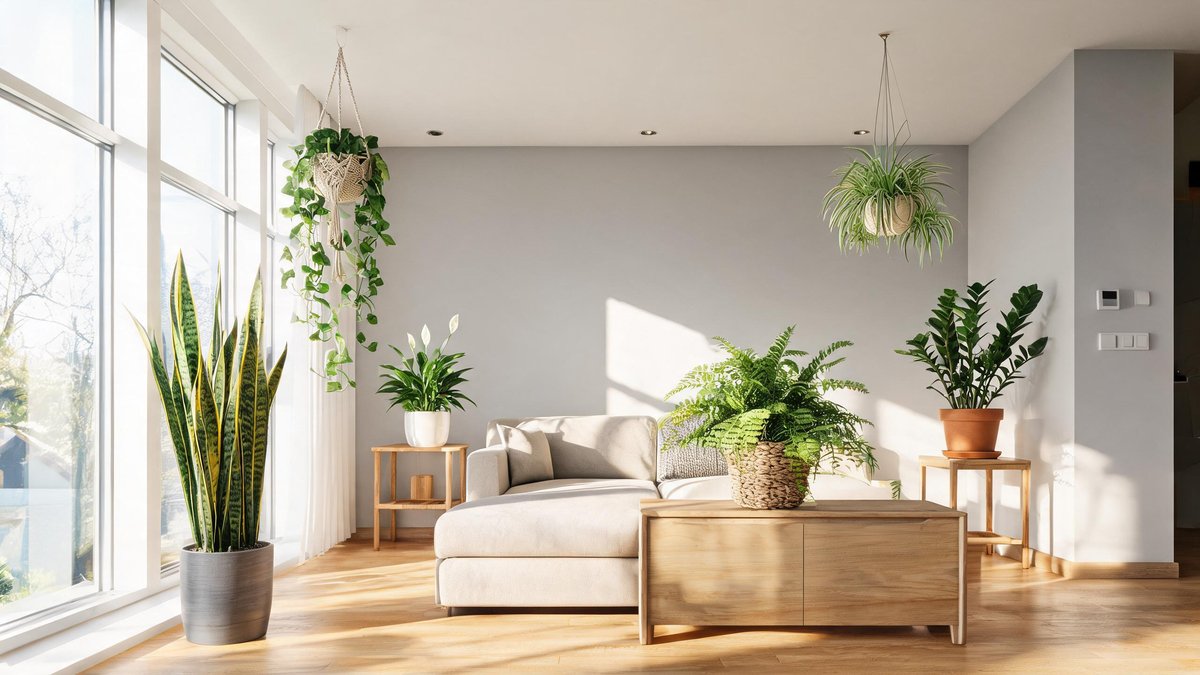
The snake plant, also known as mother-in-law's tongue, is one of the most effective and resilient air-purifying plants available. It excels at removing formaldehyde and benzene, and uniquely continues to produce oxygen at night through a specialized form of photosynthesis called crassulacean acid metabolism (CAM). This makes it an ideal bedroom plant. Snake plants tolerate extremely low light, irregular watering, and dry air, making them nearly impossible to kill even for complete beginners. They are available in dozens of varieties, from the common tall green Sansevieria trifasciata to compact cylindrical forms.
The peace lily is another top performer, ranking highly in NASA's studies for removing all five tested VOCs. Its broad, dark green leaves efficiently capture airborne particles, and it produces elegant white blooms several times per year under proper conditions. Peace lilies communicate their watering needs clearly by dramatic drooping, making them easy to maintain. The spider plant, according to research published on Wikipedia's Chlorophytum comosum entry, is particularly effective at removing formaldehyde and xylene, and produces numerous baby spiderettes that can be propagated to expand your collection at no cost.
Best Plants for Low-Light Spaces
Many indoor rooms receive minimal natural light, particularly those with north-facing windows, deep floor plans, or windowless bathrooms. Fortunately, several air-purifying plants have evolved to thrive in the dim understory of tropical forests and adapt well to low-light indoor conditions.
The ZZ plant (Zamioculcas zamiifolia) is arguably the most tolerant of all low-light houseplants. Its thick, waxy leaves store water efficiently, and it can survive for months in rooms with only fluorescent office lighting. ZZ plants remove xylene, toluene, and benzene from the air. The Chinese evergreen (Aglaonema) offers stunning variegated foliage in shades of green, silver, pink, and red, and thrives in low to medium light while filtering formaldehyde and benzene. Pothos (Epipremnum aureum), sometimes called devil's ivy, grows vigorously in low light and is one of the easiest plants to propagate. Its trailing vines can be trained to climb trellises or allowed to cascade from hanging baskets.
For bathrooms with minimal natural light, the cast iron plant (Aspidistra elatira) lives up to its name, tolerating neglect, temperature fluctuations, and low light that would kill most other plants. Boston ferns adapt well to the humidity of bathrooms and are effective at removing formaldehyde from the air. Parlor palms add a graceful, tropical aesthetic to low-light corners while filtering airborne toxins common in household environments.
Pet-Safe Air-Purifying Plants
A critical consideration for pet owners is that many popular air-purifying plants are toxic to cats and dogs. The ASPCA maintains a comprehensive database of toxic and non-toxic plants, and several commonly recommended houseplants appear on the toxic list. Peace lilies, pothos, snake plants, philodendrons, and Chinese evergreens all contain insoluble calcium oxalate crystals that cause oral irritation, excessive drooling, vomiting, and difficulty swallowing if ingested by pets.
Fortunately, numerous effective air-purifying plants are completely safe for homes with curious pets. The spider plant (Chlorophytum comosum) is non-toxic and actually mildly hallucinogenic to cats (attracting them to chew the leaves, so place it out of reach). Boston ferns (Nephrolepis exaltata) are safe for all pets and thrive in humid bathrooms or kitchens. Areca palms, parlor palms, and bamboo palms add vertical interest without toxicity concerns. The friendship plant (Pilea involucrata) and Swedish ivy are also safe choices that propagate easily from cuttings.
Room-by-Room Plant Placement Guide
Strategic placement of air-purifying plants maximizes their benefits while ensuring they receive appropriate light and humidity for healthy growth. Each room in your home has distinct environmental conditions that suit different plant species.
Bedrooms benefit from plants that continue producing oxygen at night, particularly snake plants and aloe vera. Peace lilies and English ivy are also suitable for bedrooms and remove VOCs commonly off-gassed by mattresses, pillows, and synthetic bedding. For living rooms and family rooms where you spend most of your awake time, larger plants such as fiddle-leaf figs, rubber plants, and areca palms make bold design statements while continuously filtering the air. Kitchens with higher humidity and temperature fluctuations suit herbs like basil, rosemary, and mint, which also purify air and provide fresh cooking ingredients. Bathrooms with limited light and high humidity are ideal for ferns, orchids, and peace lilies that appreciate the moist environment.
Essential Care Tips for Thriving Plants
Even the most resilient air-purifying plants require basic care to survive and remain effective. The most common mistake is overwatering, which leads to root rot, yellowing leaves, and ultimately plant death. Most houseplants prefer their soil to dry out partially between waterings. Insert your finger about one inch into the soil; if it feels dry at that depth, it is time to water. Always use pots with drainage holes and avoid letting plants sit in standing water.
Light requirements vary significantly between species, but a general rule is that plants with darker green leaves tolerate lower light conditions, while variegated or colorful foliage requires brighter indirect light. Dust accumulation on leaves blocks light absorption and reduces air-purifying efficiency. Wipe leaves with a damp cloth every few weeks or give plants a gentle shower. Fertilize during the growing season (spring and summer) with a balanced liquid fertilizer diluted to half strength every four to six weeks. Most houseplants benefit from repotting every one to two years into slightly larger containers with fresh potting mix.
According to guidance from the Wikipedia article on houseplant care, grouping plants together creates a beneficial microclimate with higher humidity that helps all plants in the group thrive. This is particularly useful during winter when indoor heating dries out the air significantly.